Ayodhya – City Of Ram & Ramayan
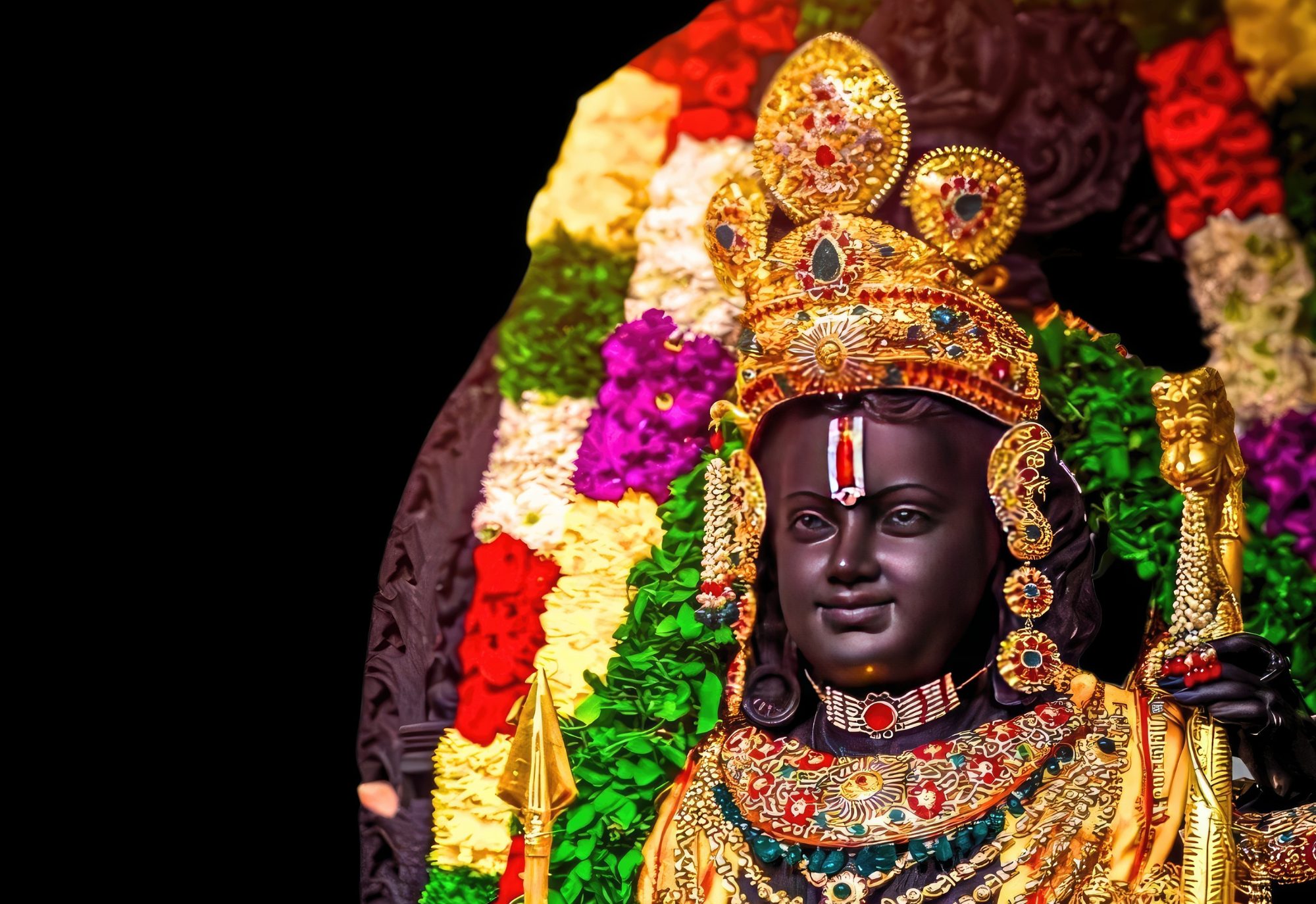
Ayodhya was on my wish list for places to travel to. Ayodhya – the city where Lord Ram was born, the city where the epic Ramayana commences and concludes. This is a city every child born in India knows of, even if we do not know its precise geographical location. When I started traveling, I kept looking for travelogues about this place; there were none. The ones that were there focussed primarily on the Ram Janmabhoomi debate than the city.
Ayodhya is one of the seven sacred cities of Hindus called Sapta-puris, making it a pilgrim place for Hindus. It is a city to be visited. However, in recent times, of all the 7 sacred cities this is probably the least visited for multiple reasons. When I went there in October, you hardly found any visitor or tourist there. Yes, the infrastructure is limited, but then it's just a couple of hour drive from Lucknow which is well connected by all means.
Places to visit in Ayodhya
Ram Janmabhoomi Temple
This is the site where we believe that Lord Ram was born. In the late 16th CE, a mosque was built on top of this temple. In late 20th CE, the mosque was broken to rebuild the temple. Taking these as historical facts, at this point in time, the spot of Ram Janmabhoomi remains one of the most controversial places in India. This place is fortified like no place I have seen. You deposit everything you have to get inside the premises. You have to go through multiple security checks that border on violation. You have to walk through the narrow pathways with no place to escape when you need to and with commandos watching all over you.
On reaching the temple, which is actually a Swiss tent, I had tears in my eyes. The idol of Ram Lalla is sitting in a tent surrounded by commandos and monkeys. As tourists you don't even get close to the tent-it is a good 20 feet away from you. In the minute that I was allowed to stand there, I tried to visualize the size of the temple – it seems very small. Was it a part of the larger complex, I wonder-but there was no way to know that. He had a Pujari Ji sitting at the fence between us and the temple, who gave us prasad and took the Dakshina. I walked out of the temple with a heavy heart. It's a place of devotion, not a war zone.
Hanuman Garhi Temple:
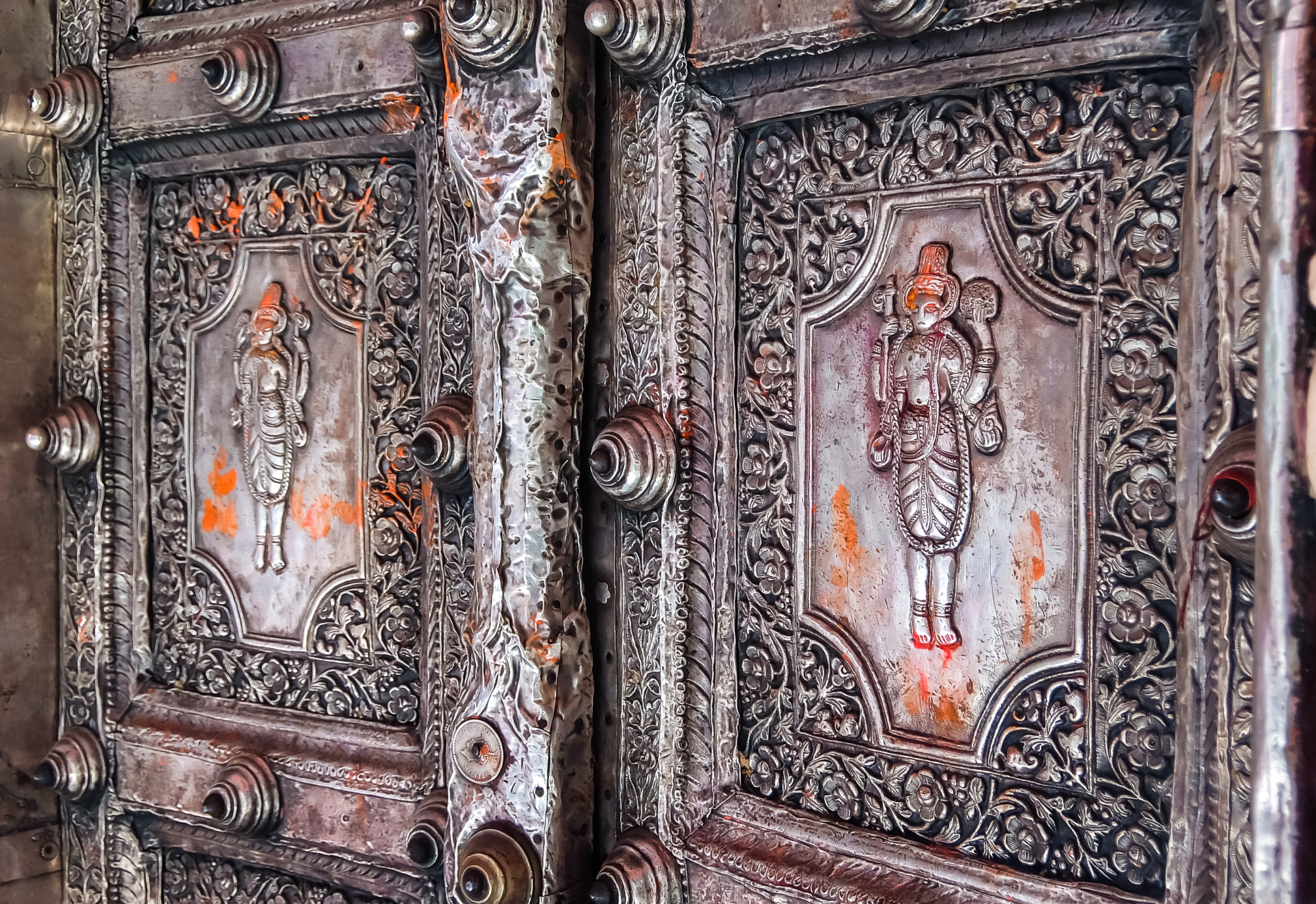
Hanuman Garhi is the most preferred temple in the town. It is said that when Lord Ram decided to leave the world and enter the Saryu River, he called Hanuman. He asked Hanuman to take care of his Ayodhya. Hanuman chose to sit on a hill so he could watch over the town. It is believed that the Hanuman Garhi temple exists where Hanuman sits, watching over the city of Ayodhya.
It is a small, beautiful temple. However, the climb to the temple involves a lot of steep stairs. Now, let me tell you a secret: there is a kind of backdoor entry where you don't have to climb that much. My most vivid memory of the Hanumangarhi temple is its brightly striking colors and the exquisite carvings on the silver doors.
The idol of Hanuman here is just an odd-shaped stone. You have to go to the rooftop of the temple at Hanuman Garhi. You can get a top view of the city. If you have a guide with you, then they would be able to point out the various landmarks of the city. How I wish there was a board pointing out or a young pandit trained to tell the visitors about it.
Kanak Bhawan
This is perhaps the most beautiful temple in this town. The very entrance gate, colorfully carved with recessed arches, enchants one. You go inside and see all the walls and windows carved around the centre courtyard. I felt a strong feminine energy running in this place even before I heard the legend behind this beautiful temple. Notice it is called Bhavan and not temple; it means a dwelling place.
Legend has it that this palace was presented to Sita as part of her wedding gift by Kaikayee, Ram's stepmother and the youngest wife of King Dashrath. Needless to say, the structure that stands today is of quite a recent date. My guide told me that at different times, different temples were built at this site. On the main wall, a board enumerates renovations done since the Treta Yuga, Dvapara Yuga, and recent times, complete with the names of the renovators.
This idols of Ram and Sita in this temple in Kanak Bhawan are of the most beautiful. You get an image of Ram and Sita as prasad here. We visited this temple in the evening—during the evening aarti. Devotees sat in front of the idol and sang bhajans that stirred an emotion of Devotion.
Ghats of Ayodhya
Ayodhya is situated on the banks of the Saryu River. Saryu, also called Sarju, is an integral part of the story of Ramayana. Like every city sacred city located on the banks of a river, there are ghats with stories. A board at Guptar Ghat tells the story of the Saryu River that originates from Lake Mansarovar in the Himalayas and soon after Ayodhya merges with the mighty Ganga.
Guptar Ghat
We finally landed on the other bank of the Saryu at Faizabad. My Ayodhya journey, therefore began at the Guptar Ghat. There stands a quiet, quaint, lonely ghat, dominated by a big temple in pale yellow, on the banks of the Saryu River. A few colored boats are parked next to the Chai Pakora shops.
We boarded the boat and started our journey towards the town. On the way, we saw last rites being performed at the sand islands of Saryu.
Saryu is a wide river and you can take a long boat ride on it. You get to see many birds as you go around. As you get close to the shore, you get a view of the skyline of the town.
Jhunki Ghat
At the town, we landed at Jhunki Ghat – a cleaner, grander version of ghats you see at places like Varanasi. The ghat was clean and freshly whitewashed. I had a bright marigold mala around my neck, so it almost felt being a part of the place. You can have a peaceful walk on ghats like this.
Laxman Ghat
Laxman Ghat is situated a little ahead of Jhumki Ghat. This ghat has been of importance because of the belief that at this point, Lakshman, the younger brother of Ram, took Jal Samadhi.
Saryu Arti
In the evening we attended the Saryu Arti. I have attended similar Arti at Ganga in Varanasi and at the Yamuna in Bateshwar. I believe this is a new initiative. As cities grow, new rituals are added and evening aarti on banks of rivers seems to be a 21st CE ritual. Having said that, it is a beautiful site to see the river lighted with earthen lamps.
The spiritual aura is created as the multitiered lamps go around. Music and songs add their own charm to the aura. I enjoy these Aarti's a lot. But the best one at the moment is still that of Varanasi.
Finding Ram in Ayodhya
To many of us, this place stands for Ram–who embodies the good qualities of a human being. I tried to understand what Ram would mean in the town today. I spoke to a few people I met and I learned that in Ayodhya Ram is treated in the Swaroop or in the form as one wants. For some, he is still a baby called Ram Lalla. To the mother, he is a son. To young men, a Sakha or friend. Then to the people from Mithila – Sita's place, he is Var Roop, meaning son-in-law. There is no one way of looking at him.
Now, what Ram is, how much value he served, why one should come to Ayodhya—all these were answered perfectly by Swami Dineshacharya of Hari Dham. According to him, Ram's life gave instructions as to how to live a righteous life. Ram teaches you about being a good human, and so does the place. If you understand Hindi, hear him speak about this:
Ayodhya Research Center
There is a pretty new, centrally located Research Centre in the middle of the town that aims to document Ramayana as depicted in various art forms. Well, each and every corner of India has a Ramayana story to tell. Why just India; we find Ramayana stories in Southeast Asia—in Thailand, Indonesia—and, of course, Sri Lanka is part of the story itself.
Here you get to see the story of Ramayana in various art forms. There is one wall full of Ramayana in Madhubani paintings. The colorful geometric patterns narrate the story we all know. Then there is Ramayana in Odisha's Patachitra style.
There are masks used in various types of Ramayana performances or Ram Lila's across the continent. On the ground floor, we saw a series of paintings depicting scenes from Ramayana. What is interesting here is the depiction of Ramayan geography. The physical location of each scene of Ramayana is depicted on maps. I found this research incredible.
I was also told that the Ramayana is performed every day at this center. Though I couldn't see the performance, I hope to see it next time I come to visit the town.
Travel Tips
If you do plan to visit the Ram Janmabhoomi Temple, then carry your identity card in case you are Indian and your passport if you are not. You might find intelligence officers coming up to you and asking one or two questions. They are quite friendly; just give them what they want.
It is a small town. One can get around it by walking. Although rickshaws are available anywhere. Ram Navami which normally falls in April and Diwali which normally falls in early November are the biggest festivals associated with Lord Ram. Obviously they are big celebrations in the city. If you want to attend them then check the festival dates for the year & plan accordingly.
There are not too many hotels in the town. Most of the accommodation is in Dharamshalas that are attached to various temples or belong to different communities. For good hotels, you would have to stay at Lucknow. Hope this changes soon. The food that is available is most vegetarian and simple. We were served a Sattvik Thali which was at an Ashram – which means it was not only vegetarian but also devoid of onion and garlic.